

THE BUSINESS ARMY
As the Roosevelt administration planned to move off the gold standard, some industrialists became hysterical…

As the Roosevelt administration planned to move off the gold standard, some industrialists became hysterical…
A lot of canonical short fiction is either not adapted to film, or turned into audio books (novels are preferred for film adaptations).
However, there are exceptions. Nathaniel Hawthorne’s Young Goodman Brown was adapted as a movie. The trailer here: https://youtu.be/VuY0qRI-7mM?si=hnc_ZHl0g3vLmbsj
(There’s apparently another professional film version of it, too.)
I can’t judge the entire film but it’s obvious even from the trailer that the both dialogue and tone of the story are changed.
This young filmmaker version of the story *does* make an attempt to stay true to the short story’s tone but abbreviates it radically and has uneven dialogue that’s sometimes true to the text and sometimes has an updated, goofily contemporary, quality that’s impossible to take seriously: https://youtu.be/N3vQu25X2RI?si=yuFW8E5upO1pK0pZ
So film adaptations are hard to pull off without losing much of the original beauty of the story, which lies in its language.
Yet the audio books lack the visual interestingness that a short story like this would inspire a lot of filmmakers.
And so we come full circle: how can one adapt a short story to film and new media, while still retaining the beauty of the original?
https://youtu.be/Nq6AY2AaEe4?si=wFqLGdjEdh5xhKsW


From a series of drawings of workplaces in 1980s Toronto. I’d carry my sketchbook with me and do these from life without photo references. This one from a small machinery shop called GM Machinery on Richmond. Now defunct. It’s little known that medium scale machinery and garment production existed throughout downtown Toronto until the early 90s.
D’un series des dessins des locales de travail à Toronto dans les années 80s. J’ai porté mon cahier de sketch et fait ses dessins sans références photographiques.

Am cleaning out my mom’s bookshelves. The original plan was utilitarian; get rid of all except a handful of special volumes. But finding that hard. It’s a good library, with, unsurprisingly, a strong contingent of Cdn books.
Reading these, though, is a mixed bag. Am currently reading a novel by a prize winning author described as “beloved” on the dust jacket. He died a few yrs ago and was instantly forgotten. Why, exactly? Who knows. However, no great injustice that the novel I’m reading is not still talked abt; it’s abt first love during the 1940s, and while it has its moments, it’s generally a static read. Scenes rarely come alive.
My mom and brother often used to discuss why CanLit struggled being as vital as Am or Brit lit. Reading this novel, two explanations come to mind: one (a point my mom liked to make): Canadian novelists (and their publishers) often fixated with being “worthy”; the novels function as moral lessons, not a mix of entertainment and art. Another is the anemic state of criticism in Canada now. @stevenwbeattie has remarked that a literature can only be as good as its criticism. The novel I’m reading now received high praise in a major news outlet and Q&Q. The two criteria intertwine; an urge toward moralizing and emotionally fake criticism lead to a static literature in which better work struggles to break through.
What then is to be done? Cdn movies have some of the same shortcomings but not quite as noticeably. Part of the solution is to write fictional narratives for print that more closely resemble movie scripts. This would at least force Cdn writers to avoid the stylistically pedestrian introspection that sucks the life out of so many of their scenes (the point here being that timid criticism allows Cdn writers to keep doing this). At least with the format of a script, a writer is forced to bring the reader into current action. Narratives using this strategy can still be “quiet”. But they need not so often remove the reader — and the narrative — from the present. In other words, they need not privilege moralistic reflection over action. Examples of how this might work to follow.




In a recent review of Patrick DeWitt's novel The Librarianist, Steven Beattie gives what seems at first read a positive assessment of the DeWitt work. The novel is filled with self-consciously flamboyant characters -- apparently an artistic strategy to throw into stark relief the considerable blandness of the novel's protagonist: the lonely, aging librarian Bob Crane.
Beattie: There are earlier indications of deWitt’s “stealth absurdism” in the character of Miss Ogilvie, Bob’s first boss at the library. A vicious harridan who prizes nothing so much as silence, Miss Ogilvie is a comic delight, a character on the margins of the story who fully inhabits every scene she appears in. Despite her powerful presence, however, neither she nor Connie’s father — nor, for that matter, the bombastic Ethan — fully detract from the focus on Bob and his bookish interiority, which carries “The Librarianist” forward in a spirit of what might be called insouciant melancholy.
However, there are problems with literary flamboyance, and one of them is it makes a narrative hard to believe. And, near the end of the review, Beattie seems to acknowledge this -- albeit with the criticism slipped quietly, librarian-like, into a drawer: "Of course, the section at the Hotel Elba goes to show the extent to which an ordinary life can be deceptive, though this comes at a cost on the level of emotional resonance. The aching heart of “The Librarianist” is a piercing seriocomic character study of isolation and abandonment. Would that deWitt had left his more flamboyant tendencies in the drawer for this one."
Whether The Librarianist is truly successful as a work of vital art, it is certain to sell well: almost all of DeWitt's novels have become best sellers, and many of them adapted to movies, which only augments DeWitt's celebrity as a writer. The movie-making process is quite different from the novel-writing one, and DeWitt emphasizes this in a September 26/18 interview he did with Library Hub. In the interview, DeWitt emphasizes the considerable difference between bringing a novel manuscript and a film to completion: "I didn’t really understand how difficult it is to get a movie made. It took eight years, and so many people worked so hard over the course of those years to get the film made. It makes me thankful for the relative simplicity of life as a fiction writer where you sit down and do it."
However, by the time the movie of the The Sisters Brothers was complete, DeWitt was already experienced in the film industry; in 2011, he wrote the screenplay for a movie entitled Terri. He was conversant with both mediums. He was also aware of the dangers of movie adaptation. In a September 21/18 article in Publishing Perspectives, DeWitt apparently had misgivings about the possibility of his story being distorted unrecognizably. John C. Reilly, one of the starts of the movie version, had to reassure DeWitt that DeWitt's original narrative vision would be respected: "In a recent news conference at the Toronto International Film Festival, Reilly was quoted by Jessica Wong of the Canadian Broadcasting Corporation, saying, “We know what can happen in this process of books becoming movies. Often, they get twisted into an unrecognizable shape … We said, ‘Pat, we’ll try our very hardest to make a great film out of this. We’ll find the very best people we can. Please trust us,'”"
#ecosystem #NaturalRejuvination #globalwarming
Clip….
Sometimes human behaviour can help repair ecosystems — from damage done by previous human behaviour.
Full video at YouTube: https://youtu.be/hryEkdBmt5E
#globalwarming #climatechange
Clip — full video at YouTube: https://youtu.be/w8e9G4TUcIk .
Climate change is real and it’s been affecting the weather patterns in South Korea for many years.
What changes do you notice in your region?
THE WAR ON SMOG [Text]
The bombs are smart
Even against camouflage,
And they drop their loads
With a righteous
Boom.
We are saved frequently
By these awesome systems.
They save us
From emergencies
And all the,
All the bad guys.
— Finn Harvor
*
From my collection of authorial movies. These poems are primarily from a massive project entitled Plastic Millennium. It subdivides into a series of modules and thematic concerns. What is here are a few pieces from a series of nature works entitled the "Baram" series ("baram" is the transliteration from the Korean word for wind). Also are a few interlinked pieces about war and what I term “The Constant Roar of the State”. I'm drawing a linkage between these and the nature poems insofar as industrialism now – as in, really now – is impinging on what we define as the natural; in other words, we are warring on nature itself. The metaphors have disappeared. We're in the midst of something that is moving with glacial speed, but is like a bomb going off.
The Baram Series contains a substantial amount of nature scenery (a passion of mine). But it is not meant to valourize or sentimentalize the reality of 21st Century nature, which, after all, is increasingly boxed in by 21st Century development. One can see that in Canada, where I grew up; one sees it especially vividly in Asia, where I now live. The project started almost by accident: I had a piece entitled “Baram Writer” accepted by an online lit magazine (now defunct). The title was a play on words: a few years before, I'd seen a movie in Korea entitled “Baram Fighter” – that is, the transliteration of Hangeul to the Roman alphabet sounded just the same. I liked the play on words, and kept the “baram” as a sort of talisman for what followed.
These pieces exist as poems and videos, with each element of the project linked but also discrete. I have been working on the project for many years, and am not trying to be trendy or “newsy”, but instead capture something of the larger age we live in. War and the environment are now connected: by the very act of “fighting an enemy”, we – via the exhaustive machinery of war – create another, more amorphous, but also threatening enemy.
In these poems, "baram" -- or other elementary aspects of nature ("geu-neul" [shadow] and "hai" [sun]) -- do not function so much as symbols of nature, but direct "branches" of it. In other words, nature touches us directly, and gives us tangible experience. Yet at the same time this is happening, nature also can bring us closer to other forms of more emotional experience that are linked to our connections with the others who are meaningful in our lives. Yet articulating this rather simple connection is hard, and that is because being conscious of the experience is hard. Therefore, these poems will, I hope, be read on several levels: as appreciations of the natural, as experiential-philosophical meditations, and as love poems.
These poems are in turn are from a much larger project that in its totality comprises over 800,000 words, 1,500 drawings, 1,000 plus original photos, 100 original songs, and 1400 authorial movies (movies based on a belletristic text in which every element is made – authored – by one artistic sensibility). It is a first. (There are longer textual works out there, obviously, but none as long and also with as much variety of artistic forms.) As I remarked above, I've been working on this material for many years now, and it has a broad thematic range.
About myself: I'm an artist, writer, filmmaker, and occasional musician, and live with my wife in South Korea. I've published art and writing in The Partisan [upcoming], Pacifism21, Former People, The Puritan, Eclectica, Canadian Notes and Queries, Rain Taxi, The Brooklyn Rail, The Korea Times, Dogmatika, Dark Sky, the Quarterly Conversation, rabble, the HUFS International Journal of Foreign Studies, The Toronto Star, Globe and Mail, Now Weekly, The Canadian Forum, This Magazine and several other publications. I've had group and solo shows of of my artwork, have written and staged two fringe plays, and invented a new genre of experimental movie (the “authorial movie”, in which the basis of the narrative is a belletristic text, such as a poem, short story or movie, and one person – one author – produces all elements of the video, such as text, art and music (for more examples of these, see the links below)). I have had group and solo shows of my visual art.My videopoetry has been screened in the US, UK, Greece, Ireland, Hong Kong, South Korea, Kazakhstan, and India. Finally, I blog at Conversations in the Book Trade, where I have conducted interviews with people including Adam Bellow, Ian Brown, Philip Marchand, Bev Daurio, Brian Palmu, derek beaulieu, Ed Champion, and Richard Nash. Link: http://conversationsinthebooktrade.blogspot.com/
https://youtu.be/ZmCk1a6uDyk
#canlit #ChatGPT #chatgpt4 . ChatGPT is causing consternation among writers. What kind of effects strategies can we develop to prevent literary culture from being “disrupted”? The answer lies partly in better criticism.
Clip above.
Full video at YouTube: https://youtu.be/UZuW9xPAgV4
#climatechange #moviepoem #globalwarming #weatherpattern
If curious, full video at YouTube: https://youtu.be/UPrH6pu2bsI
Sudden changes in temperature are nothing new during transitional seasons like the spring and fall. But in recent years, these changes in South Korea have become more abrupt and extreme, leading to noticeable changes in the breeding of frogs and blooming of spring flowers. What is happening in your part of the world?
*
#changementclimatique #moviepoem #réchauffementglobal #weatherpattern
Les changements soudains de température ne sont pas nouveaux pendant les saisons de transition comme le printemps et l’automne. Mais ces dernières années, ces changements en Corée du Sud sont devenus plus brusques et extrêmes, entraînant des changements notables dans l’élevage des grenouilles et la floraison des fleurs printanières. Que se passe-t-il dans votre partie du monde ?

YouTube link: https://youtu.be/X8Ybg1LkaHQ #SoundPollution #Seoul #urbanbiodiversity


If curious, YouTube link: https://youtu.be/kaI1ZtdRVPA
#poetryfilm #videopoetry #videoart #moviepoem
This is an early cut of one of the first feature length moviepoems I made.
Synopsis: Three Tragedies, Four Seasons is the result of three projects that came together and merged. One was from a series called World Bardo, which were short ambient pieces or videopoems, and some were about the death of my mother-in-law in the summer of 2018.
She passed away in July. It’s a sultry time of year in South Korea, and the sound of insects, the heat, and the humidity suffused everything.
The second death was that of my brother — in January, 2013. The weather then was the opposite: frigid and spartan. My brother was fascinated by both summer and winter, especially the bleak, spectral beauty of winter. The final story is a work of fiction — also set in winter. Throughout all these pieces, wanted to capture a feeling of seasonality, and also the sense of the nature/life/death cycles that exist in the world. It’s easy to talk about cycles in an abstract way; after the death of someone you care deeply about, these sensations becomes very profound. The world, the environment, feels like it’s entering you. Intense sadness dissolves us.
Awards
Krimson Horyzon International Film Festival
Nov 15, 2021
Gangtok International Film Festival
Nov 5, 2021
Chaplin International Film Festival
Nov 12, 2021
Gully International Film Festival
Oct 31, 2021
Tagore International Film Festival
Mar 17, 2021
Virgin Spring Cinefest
Jan 7, 2021
Selections
FILMYSEA INTERNATIONAL FILM FESTIVAL
Mar 18, 2022
Chennai Indie Film Festival
Dec 26, 2021
*
From my collection of ambient and authorial movies. My focus is on videopoetry; however, I work in other genres and art forms as well.
Facebook:
https://www.facebook.com/finn.harvor
VideoStorage:
https://www.facebook.com/groups/250816849097045/
#poetryfilm #poetrycommunity #experimental #antiwar #militarism #economy
A new work about our teetering world. YouTube link: youtu.be/SWqLFVSWb5I
Text online at the literary journal Mudlark: mudlark.webdelsol.com/flashes/harvor.html

경복궁에서 이 유명한 공주 와 왕자가 왔어
Une princesse et un prince qui viennent du palais de Kyoungbukkung.
A prince and princess departing Kyoungbyukkung Palace
Clip from Long Light: from a new project about my brother’s writing — his experience of being in the world. New music.
For an earlier project at YouTube, link here: youtu.be/M1rGFP3NTpw
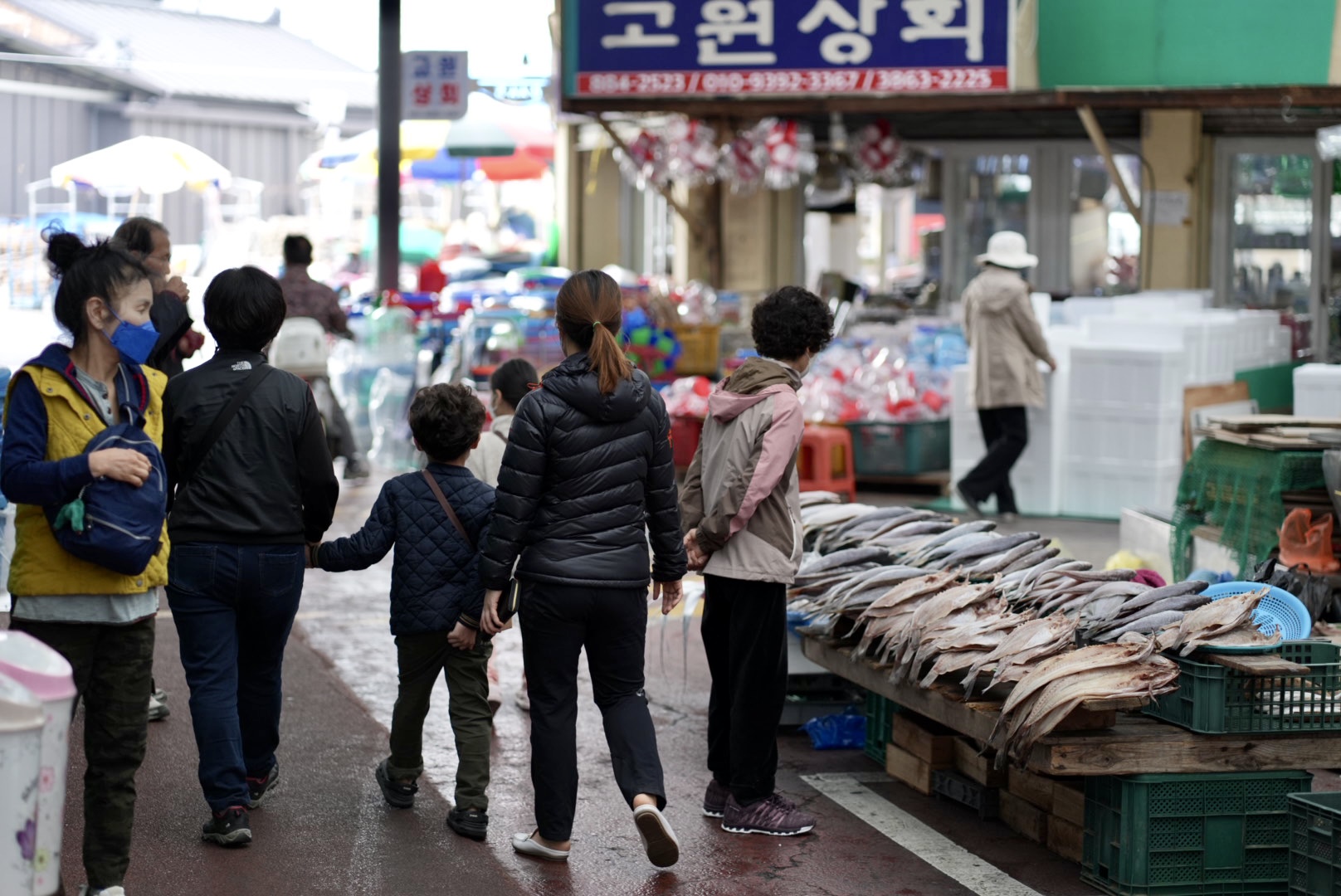
S. et moi sommes allés au marché de Hadong aujourd'hui. Sa vitalité ne semble jamais diminuer, même si je suis sûr que les supermarchés à proximité sont indifférents à son sort. Pour en savoir plus sur les traditions culinaires de Hadong, Greening Korea : youtu.be/ex6K64LYVkc et Market Alive III : youtu.be/MayScGN7qNM
A minute-short taken in Seoul. Camera: Sony a6400. Lens 18-105 f4 PZ.
#novel #publishing #literature. 2/The recent PRH merger trial underlines publishing is going through turmoil; the result in no small measure of declining fiction sales. My idea is a new form of graphic fiction should be established: the highly illustrated screenplay narrative.
#roman #édition #littérature. 2/ Le récent procès de fusion PRH souligne que l'édition est en pleine tourmente ; le résultat dans une large mesure de la baisse des ventes de fiction. Mon idée est qu'une nouvelle forme de fiction graphique devrait être établie : le scénario narratif très illustré.
새 글러브 그룹 감독 과 작가 있다…

#Korea #RuralAsia
Synopsis: A personal documentary about the agricultural life in Hadong-gun, the region of South Korea where my wife grew up. Filming was on the farm belonging to her family, and in the marketplace of the nearby town.
Green tea production is particularly prevalent in Hadong. But its farmers are under extreme economic pressure. More than this, Koreans’ habits in terms of favored beverages are changing, and the popularity of coffee is having a severely detrimental effect on green tea sales.
Kimchi, on the other hand, remains a staple of the Korean diet. And kimchi-making (kimchang) remains a traditional activity in most Korean households. Usually a group activity, after my wife’s mother’s death, my wife took this over duty solely.
[Note: a .txt file transcript is available for translation]
(Note: I have both 2K and 4K versions of this project.)
*
Screenings and awards:
Mokkho International Film Festival
May 6, 2021 (winner)
Sprouting Seed International Short Film Festival 2020
Nov 28, 2020
(Winner)
Sunfest International Short Film Festival
May 15, 2021
Pune Short Film Festival
Oct 8, 2021
INTERNATIONAL FOLKLORE FILM FESTIVAL - IFFF. Jan 2, 2021
Anatolia International Film Festival
Feb 3, 2021
Great Message International Film Festival
Mar 20, 2021
Indo Global International Film Festival
Dec 25, 2020
K. R. MOHANAN MEMORIAL INTERNATIONAL DOCUMENTARY FILM FESTIVAL
Jan 10, 2021
Jharkhand Film Festival
May 8, 2021
Alibag Short Film Festival
Jan 20, 2021
Goa Short Film Festival
Dec 10, 2020
Golden Tree International Documentary Festival
Jul 25, 2020
Stockholm Film Festival
(Finalist)
Ashoka IFF
January 20, 2022
From my collection of ambient and authorial movies. My focus is on videopoetry; however, I work in other genres and art forms as well.
Facebook:
https://www.facebook.com/finn.harvor
VideoStorage:
https://www.facebook.com/groups/250816849097045/
#Korea #RuralAsia
Synopsis: A personal documentary about the agricultural life in Hadong-gun, the region of South Korea where my wife grew up. Filming was on the farm belonging to her family, and in the marketplace of the nearby town.
Green tea production is particularly prevalent in Hadong. But its farmers are under extreme economic pressure. More than this, Koreans’ habits in terms of favored beverages are changing, and the popularity of coffee is having a severely detrimental effect on green tea sales.
Kimchi, on the other hand, remains a staple of the Korean diet. And kimchi-making (kimchang) remains a traditional activity in most Korean households. Usually a group activity, after my wife’s mother’s death, my wife took this over duty solely.
[Note: a .txt file transcript is available for translation]
(Note: I have both 2K and 4K versions of this project.)
*
Screenings and awards:
Mokkho International Film Festival
May 6, 2021 (winner)
Sprouting Seed International Short Film Festival 2020
Nov 28, 2020
(Winner)
Sunfest International Short Film Festival
May 15, 2021
Pune Short Film Festival
Oct 8, 2021
INTERNATIONAL FOLKLORE FILM FESTIVAL - IFFF. Jan 2, 2021
Anatolia International Film Festival
Feb 3, 2021
Great Message International Film Festival
Mar 20, 2021
Indo Global International Film Festival
Dec 25, 2020
K. R. MOHANAN MEMORIAL INTERNATIONAL DOCUMENTARY FILM FESTIVAL
Jan 10, 2021
Jharkhand Film Festival
May 8, 2021
Alibag Short Film Festival
Jan 20, 2021
Goa Short Film Festival
Dec 10, 2020
Golden Tree International Documentary Festival
Jul 25, 2020
Stockholm Film Festival
(Finalist)
Ashoka IFF
January 20, 2022
From my collection of ambient and authorial movies. My focus is on videopoetry; however, I work in other genres and art forms as well.
Facebook:
https://www.facebook.com/finn.harvor
VideoStorage:
https://www.facebook.com/groups/250816849097045/
World Bardo
*
“Your mother often talks about your brother,” the doctor said during the teleconference last night. “How is he?”
“Votre mère parle souvent de votre frère….” a dit le médecin hier soir pendant un conference de téléphone. “Comment ça va, lui?”
YouTube: https://youtu.be/BnsfJKkRFNA

We don’t want bad forces destroying our homelands. But is there a limit to what militaries can do to protect us? After all, untrammeled climate change also poses an existential threat…
Full video at YouTube: https://youtu.be/Mj1lJfbNJtU
#CovidIsNotOver #COVID19 #MaskMandates #SouthKorea.
Mask mandates on the streets ended some time ago in South Korea — but the vast majority of pedestrians are still masked. And though daily test results seem to indicate the pandemic worse here than other countries, that’s not so.
*
#CovidIsNotOver #COVID19 #MaskMandates #CoréeduSud.
Les mandats de masque dans les rues ont pris fin il y a quelque temps en Corée du Sud – mais la grande majorité des piétons sont toujours masqués. Et bien que les résultats des tests quotidiens semblent indiquer que la pandémie est pire ici que dans d'autres pays, ce n'est pas le cas.


